There are more Procreate brush packs on the internet than any artist could use in ten lifetimes. Most purchases end the same way: a .brushset imported, scrolled once, never opened again. The difference between a pack that lives in your workflow and one that dies in your library is almost always predictable before you buy. Six questions, in order.
1. Does it match your actual subject?
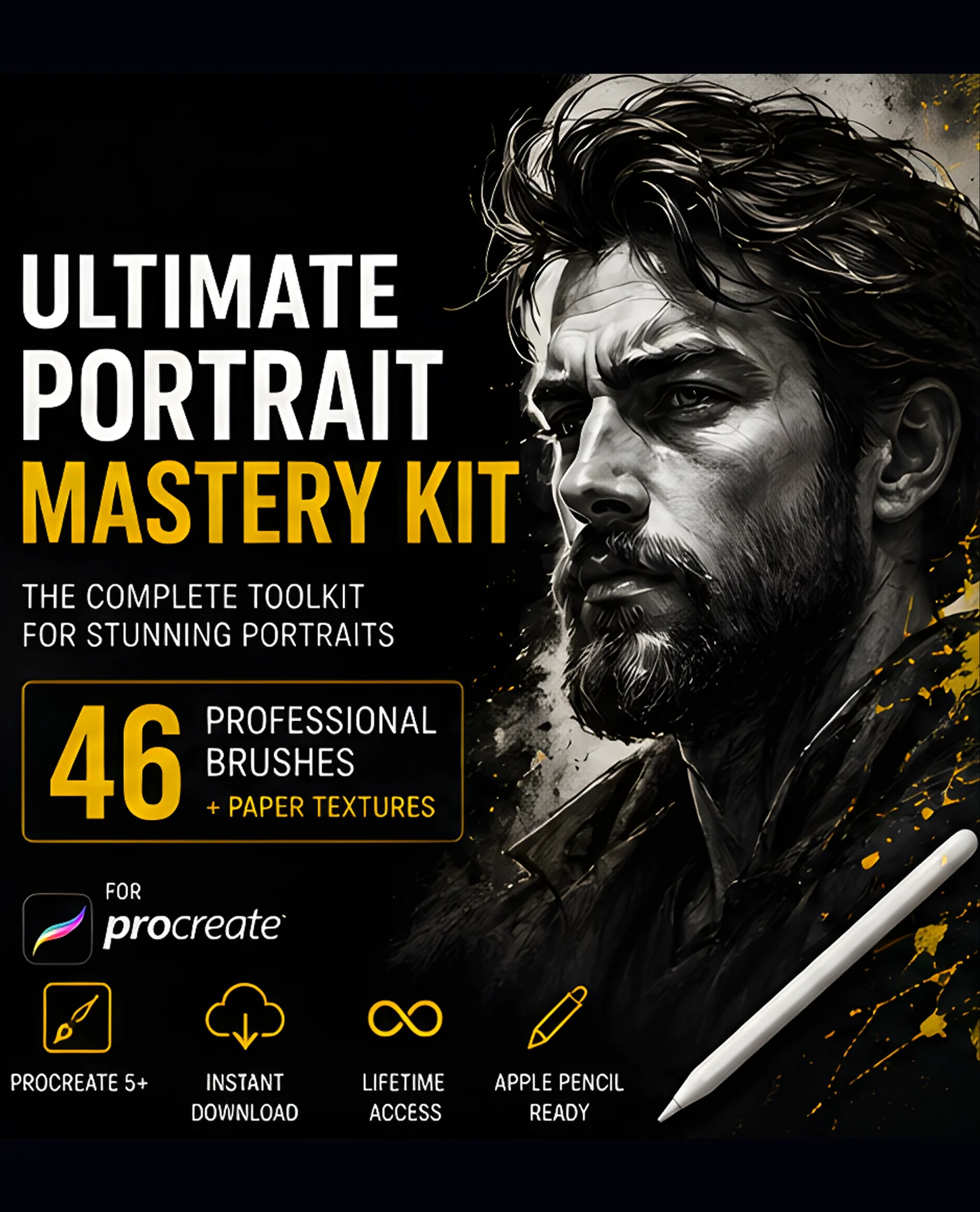
Buy toward what you paint weekly, not what looks impressive in a preview. Portrait painter? Skin, hair and blending brushes (Portrait Mastery Kit). Line-first illustrator? Line-art brushes. Wash painter? Watercolor. A gorgeous glitter pack helps nobody if you paint landscapes.
2. Can you see real stroke tests, not just artwork?
Polished result images prove the artist is good, not that the brush is good. Look for previews showing raw stroke behavior: tapers, texture, pressure response at different weights. DigiKitPro product galleries show brush behavior alongside finished art for exactly this reason.
3. Is it organized or dumped?
Twenty brushes arranged by workflow stage (Sketch → Ink → Blend → Detail) are more valuable than two hundred thrown in a pile, because organization is what makes you actually reach for them mid-painting. Check how the pack is structured, tool sections signal care.
4. Is the size honest?
Big numbers sell. Bigger numbers usually mean filler: 300 brushes of which 15 are useful is a worse purchase than 40 brushes you'll use daily. Judge a pack by its best 20%, because that 20% is what you'll actually install in your muscle memory.
5. Does the price-per-use make sense?
A $5 kit used in every painting costs nothing per use; a $30 mega-pack opened twice is expensive. Rule of thumb: if a pack covers a full workflow stage for roughly the price of a coffee, the risk is low. If you genuinely paint across many styles, then a mega bundle like the 650 Procreate Brushes Mega Bundle, over 80% off the cost of every set bought separately, is the rare big purchase with real math behind it.
6. Are requirements compatible with your setup?
Verify before checkout: .brushset format (Procreate), Procreate version support, Apple Pencil pressure/tilt behavior, and file size (some libraries exceed 1 GB, plan download space). Every DigiKitPro page lists format, contents and compatibility up front.
A healthy brush library strategy
Think of your library as concentric rings:
- Core ring, 5–10 brushes used in every piece (your pencil, liners, base, blender)
- Subject ring, kits for your main subjects (portrait skin, hair, watercolor…)
- Spice ring, effects used occasionally (glitter, smoke, texture stamps)
Buy inward-out: core first, subject second, spice last.
FAQ
Are expensive brush packs better?
Not by default. Price tracks curation and testing more than brush count, a $5 well-organized kit routinely outperforms a $30 unstructured mega-pack in daily work.
Should I buy brushes or make my own?
Both, in that order. Use professionally tuned brushes to learn what good behavior feels like; later, duplicate and edit your favorites into personal variants inside Procreate's Brush Studio.
What file format should Procreate brushes come in?
.brushset (whole libraries, one-tap install) or .brush (single brushes). Both import directly into Procreate on iPad.